
The Amalfi Coast: Sorrento, Positano, Amalfi & Ravello
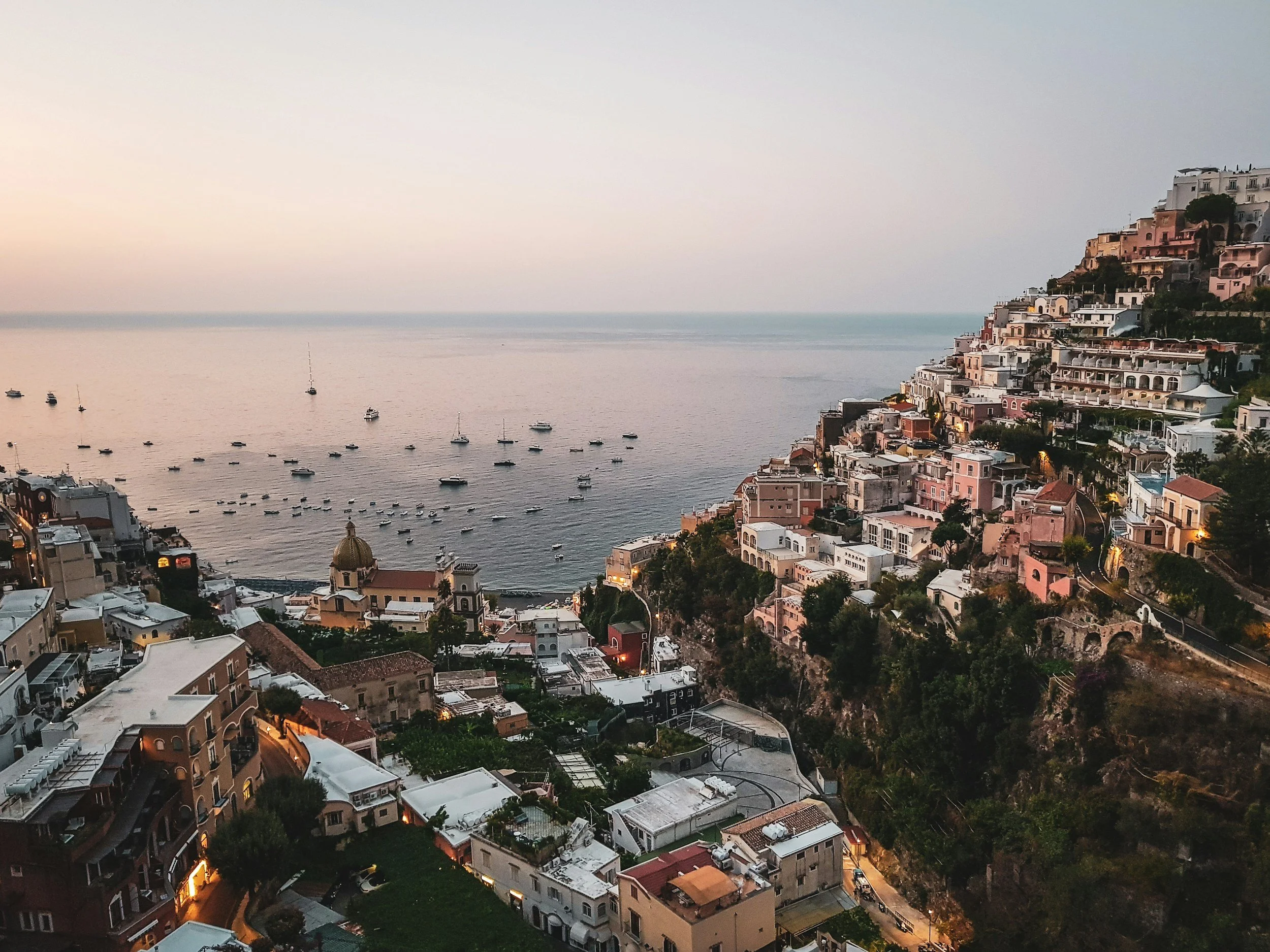
The Amalfi Coast has a reputation: picturesque cliffside towns, lemon groves, boats gliding past pastel buildings. Sorrento, Positano, Amalfi, and Ravello are four different experiences stacked along the same stretch of coastline, and choosing where to base yourself can impact your trip more than you'd expect.
This isn't a destination built for young children or a packed itinerary. The terrain is steep, the pace is relaxed, and the towns reward travellers willing to let a day unfold with nothing more urgent on it than a boat ride and a long lunch.
Choosing your base
Sorrento is the practical choice, and I mean that as a compliment. It's walkable, well-connected by ferry to Capri, Naples, and the coastal towns, and it works well as a base for day-tripping without having to commit to one village for the whole trip. If Pompeii is on your list, Sorrento is also the easiest jumping-off point.
Positano is the one everyone pictures when they hear "Amalfi Coast," and it has earned that image. Steep streets, boutique shopping, pastel buildings stacked up the cliffside. It's the most photogenic of the four towns and also the most romantic, which is why it's a top pick for honeymoons.
Amalfi is more grounded than Positano, built around a working harbour and the Piazza del Duomo, rather than curated for photos. It's a good central base, with easy access to the smaller villages along the coast.
Ravello, up above the coastline, is the most removed and the most peaceful. Artists and musicians have favoured it for generations, and it's the best choice if you want the Amalfi Coast's scenery without the seafront crowds.
When to go, how long to stay
If your travel dates aren't set in stone, this is the destination where I always recommend shoulder-season travel. June through August are hot, crowded, and expensive, and not when this coast at its best. Spring, mid-April through May, and fall, September through October, offer warm weather, space to enjoy it, and a slower pace that suits these towns better than peak season ever will. Why Shoulder Season Changes Everything gets into the case for off-season timing in more depth. Along the coast, many businesses close for winter, usually November through March, so this isn't a year-round destination.
As for how long to spend in Amalfi, three nights covers the essentials: dinner in one of the towns, the sights everyone comes for, and a sunset boat ride. But it does mean you'll be moving fast the whole time. I generally suggest five to seven nights, which gives you time for a day trip to Capri, allows you to split your stay across two towns instead of committing to one, and evenings where you can stroll leisurely, not racing to fit everything in.
Where to stay
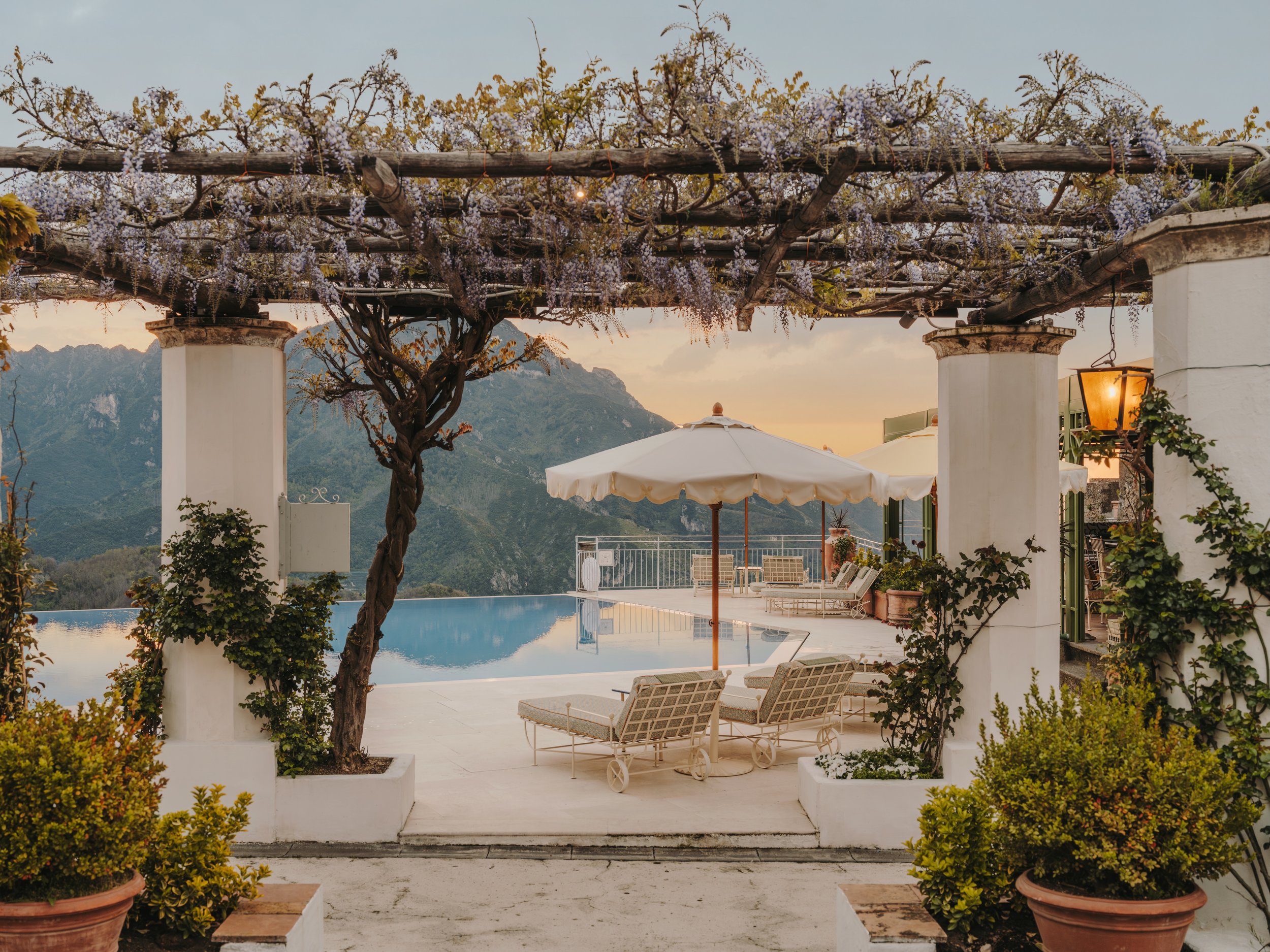
Photo courtesy of Caruso, A Belmond Hotel, Ravello
In Sorrento
Parco dei Principi sits on the clifftop with views across the entire Bay of Naples, mid-century modern design against a backdrop that doesn't need much help. Hotel Bellevue Syrene, a former 18th-century villa, puts you steps from the historic centre with sea-view terraces that make it easy to forget how central you are.
In Positano
Le Sirenuse is the name most people already know, a former private villa turned into one of Italy's most celebrated hotels, with Michelin-starred dining to match. Villa Treville, once the private estate of Franco Zeffirelli, is smaller and more secluded, with its own beach access carved into the cliffside.
In Amalfi
Borgo Santandrea blends mid-century and Mediterranean style on the cliffs just outside town, with a private beach and some of the best terraces on this stretch of coast. Hotel Santa Caterina, family-owned and generations-old, offers the kind of attentive service that comes from decades of practice.
In Ravello
Palazzo Avino, a meticulously restored 12th-century private noble residence, pairs old-world detail with Rossellinis, its Michelin-starred restaurant. Caruso, an 11th-century palace turned hotel, is the more opulent choice, with an infinity pool that's become one of the coast's most recognizable views.
Most of these stays come with partner perks: room upgrades when available, property credits, early check-in/late check-out, and breakfast daily.
Where to spend your time
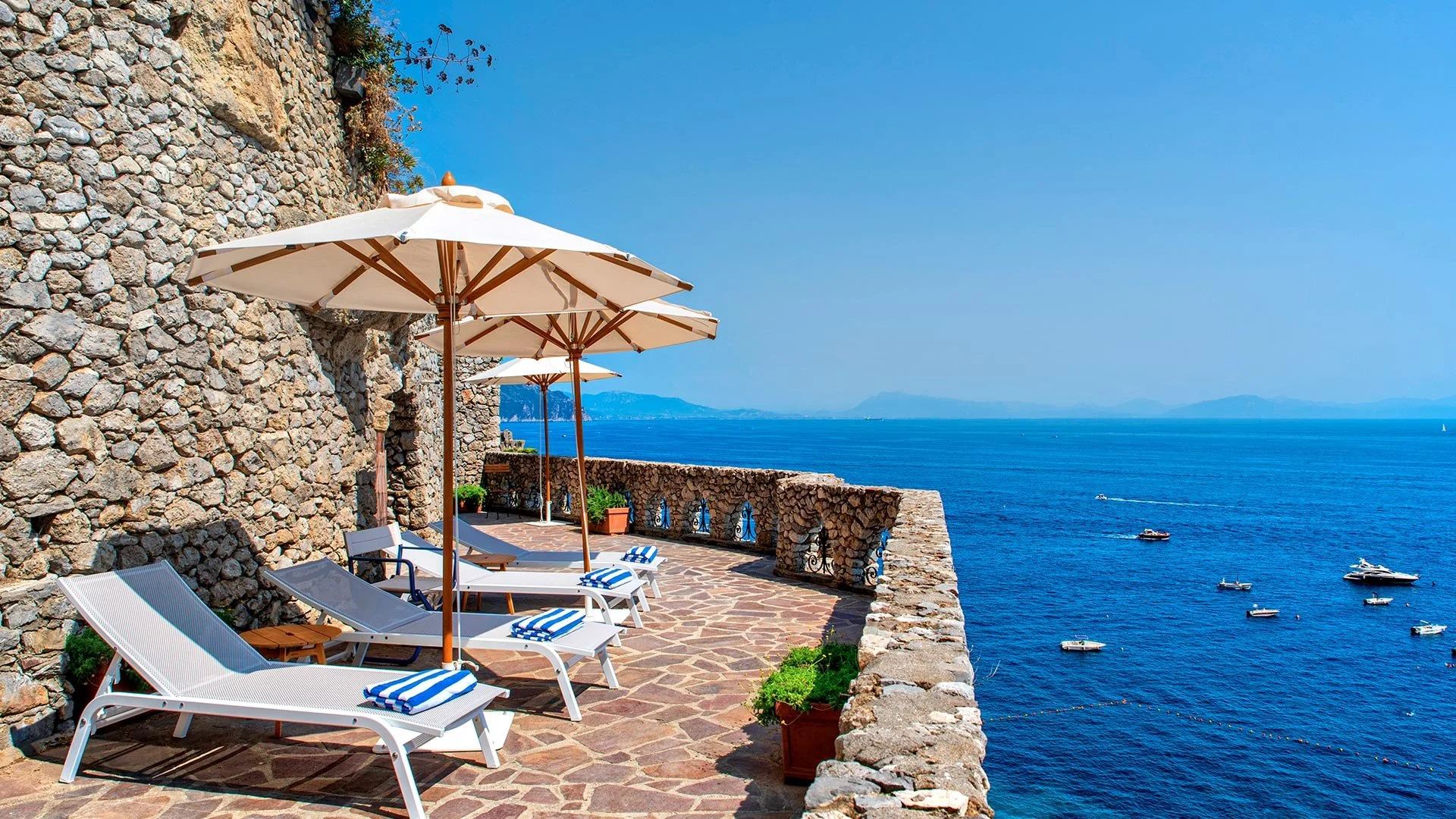
Photo courtesy of Borgo Santandrea, Amalfi
In Sorrento, the Corso Italia is worth a wander for local ceramics and limoncello, and a private boat trip along the coast with stops at secluded coves and sea caves along the way.
In Positano, the Sentiero degli Dei, the Path of the Gods, is a hike worth doing if you want views of the coastline that the beach towns themselves can't offer. Spiaggia Grande gets crowded, but Fornillo Beach, a little further away, is noticeably quieter.
In Amalfi, beyond the Piazza del Duomo, the Valle delle Ferriere is a nature reserve above the town with waterfalls and old ironworks ruins that many day-trippers miss.
In Ravello, the gardens at Villa Cimbrone and Villa Rufolo are the reason people come, and if your trip lines up with July or August, the Ravello Festival stages classical music and opera in those same gardens, an open-air setting high above the sea.
Worth adding on
Capri is a thirty-minute ferry from Sorrento, close enough for a day trip but worth an overnight if you want to experience the island without the daytime crowds. Naples, an hour by ferry or car, is a real, unpolished counterpoint to the coast's cliffside towns, with Pompeii an easy stop along the way. Further afield, Florence and Rome are each three to four hours by train, easy additions if the Amalfi Coast is one leg of a longer Italy trip.
If lakes and mountains are more your speed than cliffside towns, Lake Como, Lake Garda & Milan covers the north. Deciding where to stay across either region? Start with The Italian Hotels at the Top of My List.
Planning Something?
Which town best fits your trip? Sorrento, Positano, Amalfi, and Ravello don't just look different, they feel different once you're there. Let’s talk about how you want to spend your days, and I'll help you plan the rest: where to base yourself, which hotels suit your stay, and how to move between towns by ferry or private transfer. Start with the Inquiry Form.