
My First Big Trip — Planned by Fax Machine and Guidebook
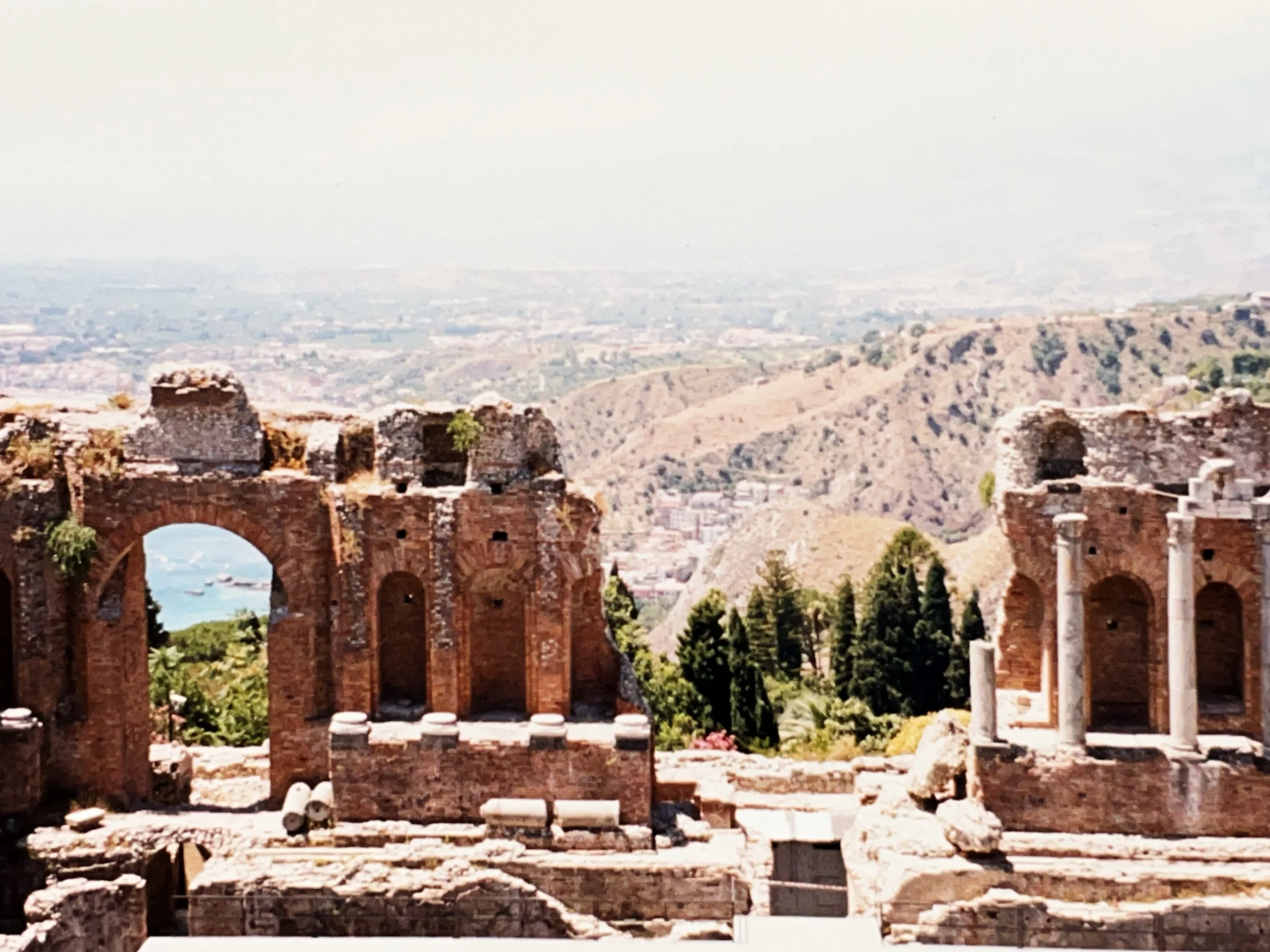
Ancient Greek Theatre of Taormina
It was 1998. A five week trip, no Google, no online booking, no reviews to scroll through at midnight, just two guidebooks, a phone, a fax machine, and travelers' cheques for the couple of hotels that needed a deposit. I planned my first international trip that way, months in advance, before I ever set foot on the plane.
The original plan: a week in France, then four weeks across Italy — Milan, Como, Venice, Ferrara, Florence, Rome, Naples, Taormina, Positano — before landing in Siena for six weeks to study Renaissance architecture. Nothing about planning this trip was fast or easy. Every hotel meant a phone call and often a fax, waiting for a reply and confirmation details. A couple of hotels required a deposit which meant mailing travelers' cheques, because that was simply how it was done. And still, looking back, the trip worked much the same way I'd plan one now: lock in what really matters, and leave real room for the rest to just happen.
Siena was the fixed point. My course had a start date, so I planned everything else around it. Confirming hotels in each of the places I knew I wanted to see, purchasing a month-long rail pass for Italy, purchasing a train schedule booklet once I arrived. France was no exception: five days in Paris, two days in Nice, with Versailles and the Louvre, which I went back to twice, were on my must-see list. Getting to Versailles turned into its own small adventure regardless; Toronto's subway hadn't prepared me for how many lines Paris has, and I got a little lost trying to find the way there.
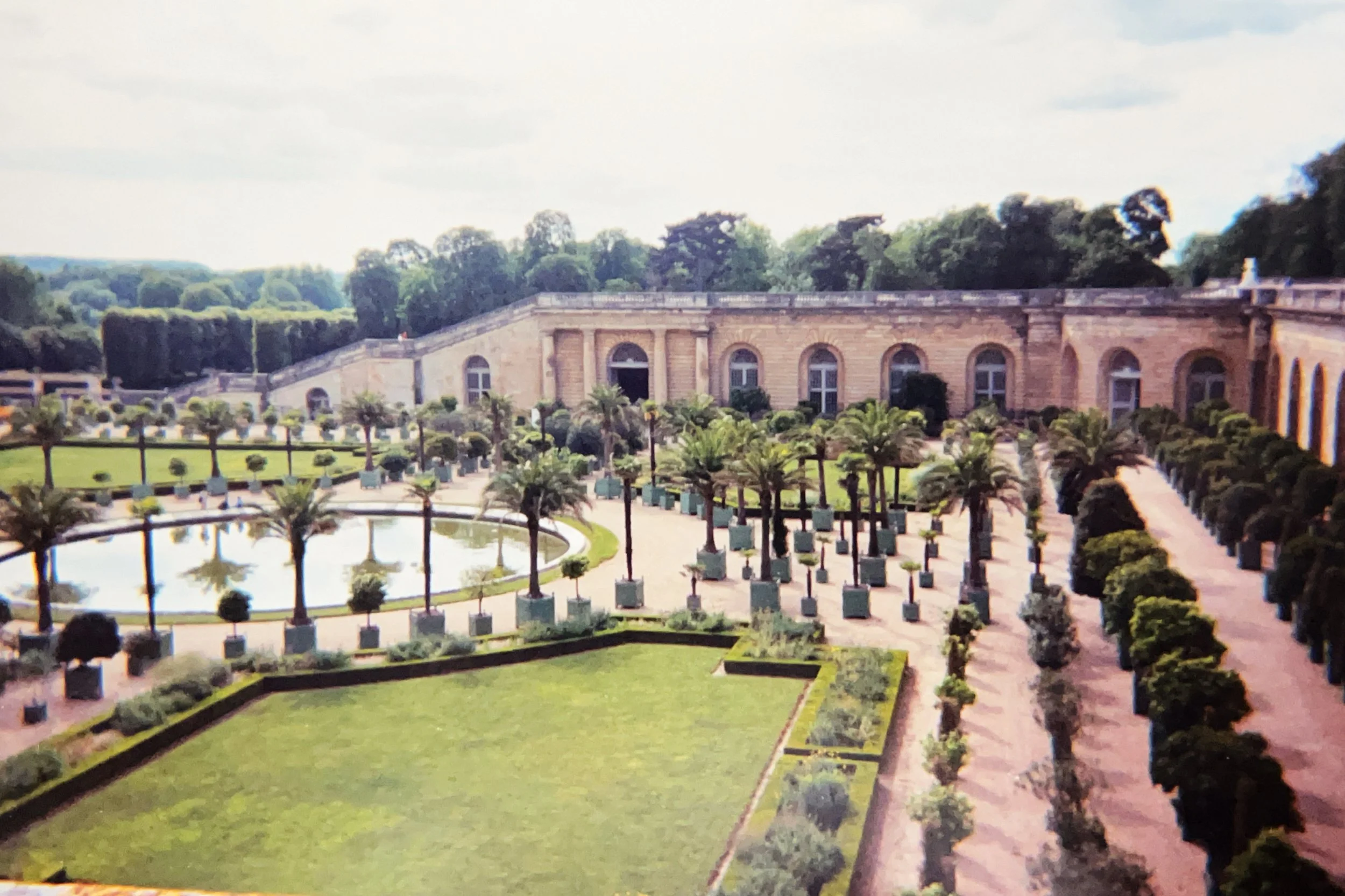
The Gardens of Versailles
One thing I hadn't planned came in Nice. There was a message waiting at my hotel when I checked in, from people I'd met once through my friend Stevie in New York City. They were staying at the same hotel; Stevie and a friend of his were at another hotel nearby. Get ready, the message said, we're going to Monte Carlo tonight. I had no idea how they'd gotten tickets, but somehow I ended up at a charity gala at the Café de Paris, champagne on the terrace, Brian May on the stage, Italian announcers narrating what was clearly a live broadcast, and a few locals who spoke French looking distinctly unimpressed by the Italian contingent. Nothing about that night was planned, and it turned out to be one of the most fun experiences of the entire trip.
The rest went mostly the way I'd mapped it out, and 1998 turned out to be a great summer to be traveling through Italy. The World Cup was on, and I ran into it everywhere I went. While I was in Como, Italy won a match and the streets filled with cars, cheering Italians and flags hanging out every window, horns going for hours. By the time I reached Rome, watching a match had become part of the rhythm of the trip.
When I arrived in Rome, I learned Stevie and a friend were there too, another happy surprise. One night out at a club, we met an Italian antiques dealer named Armando, who ended up part of our group. With a background in art history, he and I had plenty to talk about, and he became a fixture for the rest of my time in Rome. The next day, Armando took us to dinner near Campo de' Fiori, a place I never learned the name of, full of Italian families. It's where I first had arancini, along with a few other delicious dishes we all shared. We enjoyed everything so much, the food, the wine, the company, that I’m sure our group was a little louder than we should have been. I still think about that meal and wonder if I might accidentally find my way back to that restaurant some day.
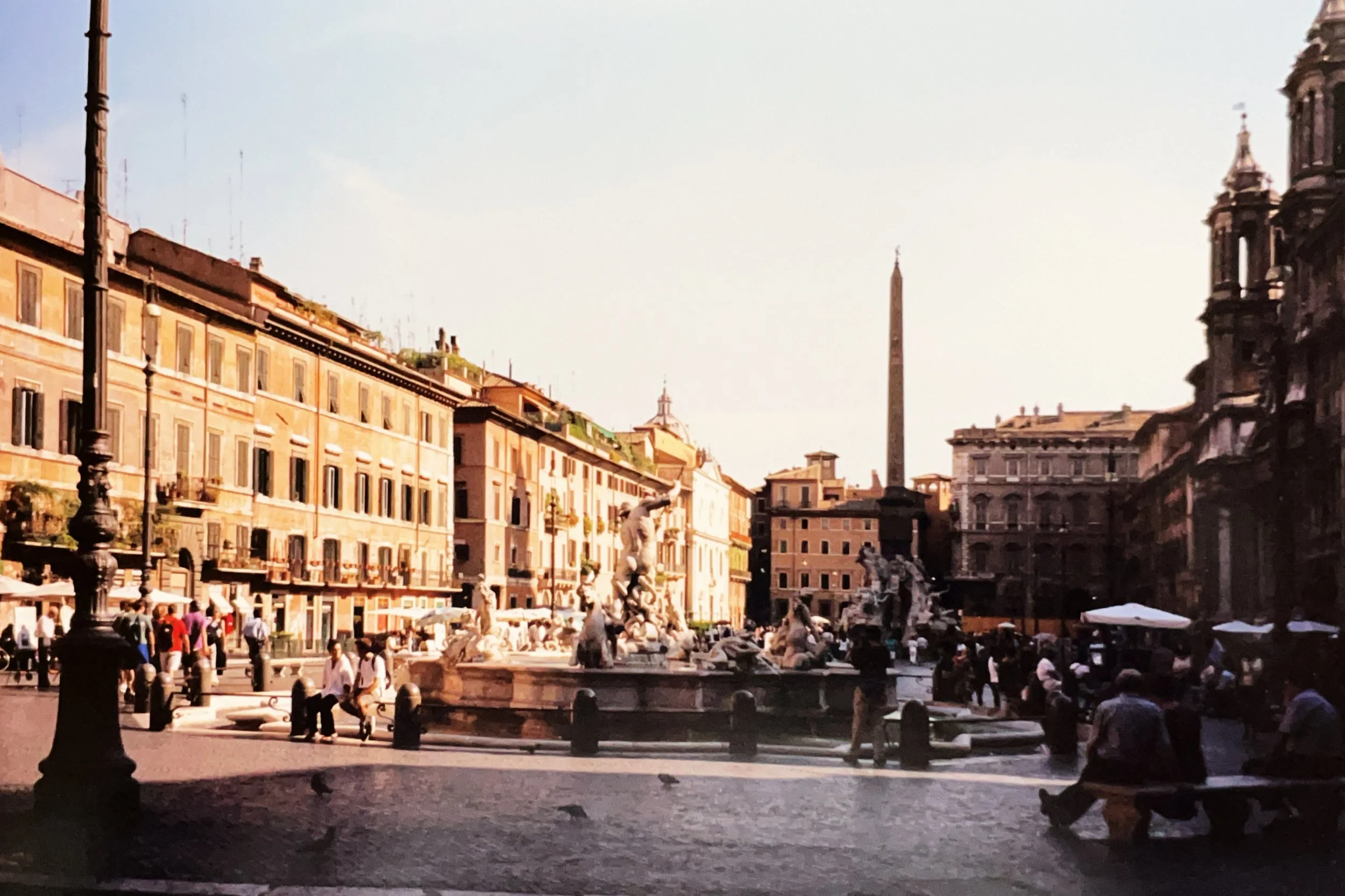
Piazza Navona, Rome
A few nights later we all met Armando again when he invited us to La Muccassassina, a well-known club in Trastevere. At the time this neighbourhood was still a bit rough around the edges, long before it became the place filled with cool wine bars and gathering spots everyone knows now. Talking with Armando, who is originally from Naples, I mentioned that Naples was my next stop, and he told me plainly to skip it. This was 1998, Naples was quite different than it is now, and I took his advice. That night I went back to my guidebooks and found Paestum, close to Naples, home to some of the best-preserved Greek temples anywhere in the world, and I started making the adjustments. After two nights in Paestum, I carried on to Taormina, which had been on the itinerary from the start.
I was staying at Villa Carlotta, which is still there today, and Taormina had already turned out to be so good that I wasn't eager to leave. When I called to reconfirm the hotel I'd booked in Positano, my next stop, I found out they'd booked nights one and three of my stay, but not two. Obviously that wasn't going to work, and cancelling Positano wasn't a hard call. I just stayed on in Taormina, and a three-night stop became six.
Much of my trip was planned, but the best parts were impossible to predict from a guidebook in advance: not the night in Monte Carlo, not the streets of Como erupting after a win, not a friend turning up in Nice and Rome out of nowhere, not rerouting a portion of the trip after a chance encounter. What made it work was the same thing that makes any good trip work: knowing which pieces are worth locking in, and letting the rest just unfold, unhurried, unplanned. That's how I still travel today, and how I advise my clients to travel. The tools have changed completely. Nobody's sending a fax to confirm a room anymore, but the instinct hasn't. Plan the things you know you really want. Leave space for what you don't yet know you'll find.
This is only the first half of the story. Six weeks in Siena, and everything that followed, are still to come.
If this is the kind of trip you're after, a few things locked in, and plenty of room left for serendipity, let’s talk! Start with the Inquiry Form and I’ll follow up to arrange a conversation.